
Published on: Jan 30, 2026
Last modified on: Feb 26, 2026
What is USD Coin (USDC) and how is it different from USDT?

Published on: Jan 30, 2026
Last modified on: Feb 26, 2026
USD Coin (USDC) is a stablecoin — a type of cryptocurrency designed to stay close to the value of the US dollar. In a market known for volatility, stablecoins act as the calm center: traders park capital, move funds between platforms, and settle profits without exiting crypto entirely.
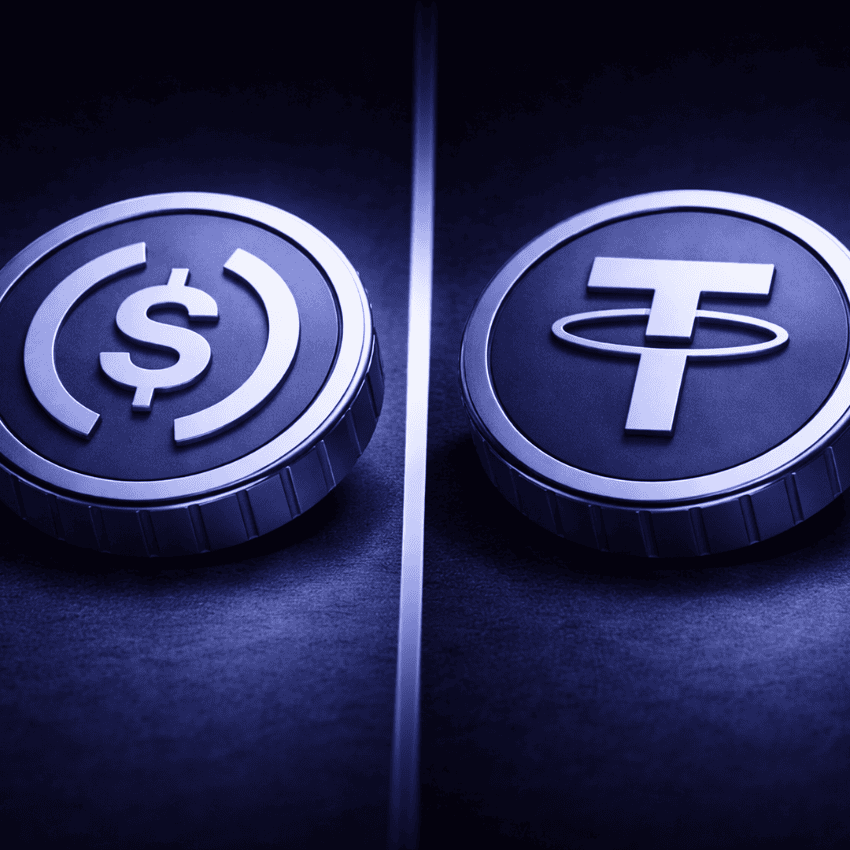
USDC is often compared directly to USDT because both aim to represent one US dollar on-chain. The difference lies not in what they promise — but how they operate, how transparent they are, and how markets perceive their risk. For active traders and platforms, that difference matters.
USDC is a dollar-backed digital currency issued by Circle. Each USDC token is designed to be backed 1:1 by cash and short-term US Treasury assets held in regulated financial institutions. The goal is simple: price stability with transparency.
USDC operates across multiple blockchains, allowing fast, low-cost transfers while maintaining a consistent dollar value. When new USDC is issued, reserves are added. When USDC is redeemed, tokens are destroyed — keeping supply aligned with real assets.
This is where USDC differs structurally from Tether’s USDT. While both aim to track the dollar, USDC emphasizes regular attestations, regulatory alignment, and reserve clarity.
In short: USDT focuses on liquidity and reach; USDC focuses on compliance and transparency.
Yes. It’s backed by cash and short-term US government assets.
It can fluctuate slightly during extreme market stress, but it’s designed to stay near $1.
It’s issued and managed by Circle under regulatory oversight.
Many users view USDC as lower-risk due to higher transparency, but both carry different tradeoffs.
Yes. Like most regulated stablecoins, addresses can be frozen under legal requirements.
USDC is widely used as digital cash inside crypto markets. Traders use it to lock in profits, move between assets instantly, and avoid exposure to volatility without touching banks. Because it settles on-chain, transfers are fast and available 24/7.
Beyond trading, USDC is heavily used in DeFi, payments, payroll, and remittances. Companies use it to pay contractors globally. Platforms use it as a base currency for pricing and settlement.
Compared to USDT, USDC is often favored in environments where regulatory clarity and auditability are required.
USDC has become one of the most widely supported stablecoins across major blockchains and platforms. Its adoption is driven less by hype and more by institutional trust. Many regulated platforms prefer USDC because of its compliance-first approach.
USDT still dominates raw trading volume globally, especially in offshore markets. However, USDC has carved out a strong position in regulated exchanges, DeFi protocols, and institutional settlements.
This split has created two dominant stablecoin camps — liquidity-first vs transparency-first.
Traders watch USDC not for price appreciation, but for market signals and capital flow. Rising USDC supply often indicates fresh capital entering crypto markets. Sudden redemptions can signal risk-off behavior.
As regulation around stablecoins tightens globally, USDC’s structure positions it well for long-term integration with traditional finance.
For traders, this means USDC is likely to remain a core base asset for years — especially on platforms prioritizing compliance and reliability.
USDC’s biggest tradeoff is control. Because it’s regulated, funds can be frozen or blacklisted if required by law. This is a feature for institutions — but a drawback for users seeking full censorship resistance.
Stablecoins also carry counterparty risk. Users rely on issuers to properly manage reserves and operations. While USDC is transparent, it is still not the same as holding physical cash.
For traders, the key is understanding when stability matters more than sovereignty — and choosing the right tool for the job.
USDC moves so much value daily that, on some days, it settles more dollars on-chain than major traditional payment networks — without banks, business hours, or borders.